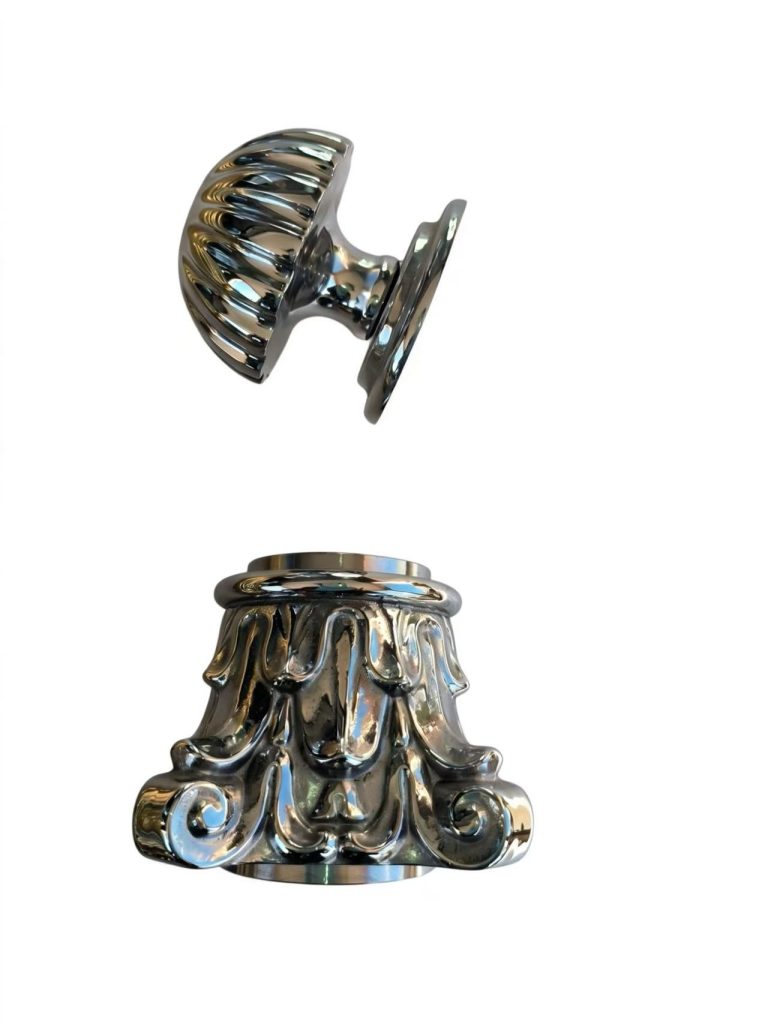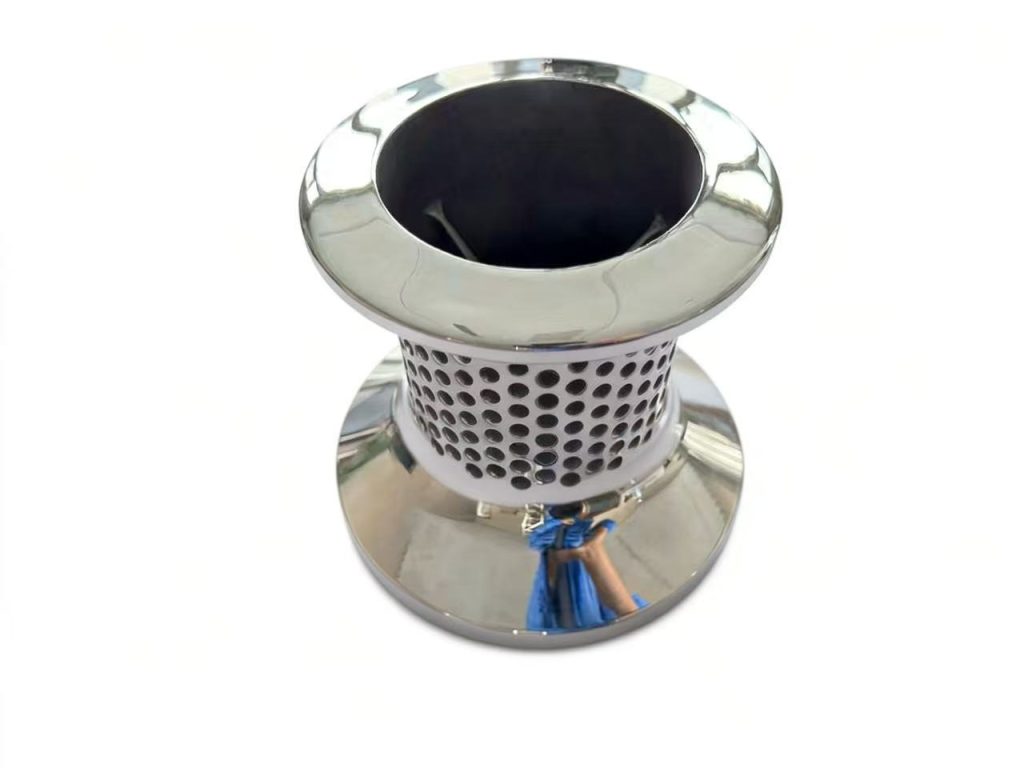
At Qingdao Aohai Precision Casting Co., Ltd., we’ve been providing investment casting solutions since 2005. Over the years, one question we frequently hear from engineers and buyers is: “How do we specify the right surface finish for our cast components?”
Investment casting is renowned for producing near-net shapes with excellent dimensional accuracy (often CT3-CT7). However, the final surface finish can vary. For many applications, particularly in automotive, marine, and industrial equipment, the choice of polishing method isn’t just about aesthetics—it’s about performance, corrosion resistance, and fatigue life.
Below is a practical guide to selecting the right polishing approach for your ferrous and non-ferrous precision castings.
1. Understand Your Material First
The first step in choosing a polish is knowing what you’re working with.
For Stainless Steels (like 310S): These are common in high-temperature exhaust systems. They often require mechanical polishing to enhance their native corrosion resistance by removing surface imperfections that could initiate oxidation.
In contrast, other Ferrous Alloys like carbon and low-alloy steels might benefit from tumbling for a uniform matte finish or grinding for weld preparation.
Similarly, Non-Ferrous Metals (Aluminum, Brass) are softer and require careful, less aggressive polishing to avoid gouging. As a result, manufacturers often use a series of finer abrasives.
2. Define the Functional Purpose
Beyond the material itself, why does your component need to be polished? The answer dictates the process.
For example, in Sealing/Leak-Proofing: Components like valve bodies or flange faces for exhaust manifolds require a precise, flat, and smooth surface. This usually requires fine grinding or lapping after initial casting to achieve the ±0.05mm precision needed for a perfect seal.
When considering Fatigue Resistance: In high-stress applications, microscopic surface cracks from casting can be initiation points for failure. A consistent mechanical polish removes this micro-cracked layer (tiny surface flaws), significantly improving the component’s lifespan.
For Flow Efficiency: In fluid or air handling components (like turbocharger housings or pump parts), a smoother surface reduces friction and turbulence, boosting overall system efficiency.
3. Match the Polish to the Part Geometry
Once the functional purpose is clear, the complexity of your “high-complexity” casting dictates the feasible polishing method.
For relatively Simple Geometries (Flanges, Round Bars): These are ideal for automated processes like centerless grinding or belt sanding, ensuring consistency and speed.
However, for Complex Geometries (Manifolds, Impellers): The intricate internal passages and external curves of a 310S exhaust manifold are impossible to automate easily. In these cases, we rely on skilled craftsmen using hand-held tools and abrasives. At Aohai, our team includes 20 employees with over 15 years of experience in specific processes—this is where their expertise shines, ensuring they properly finish every contour without altering the critical dimensions.
4. Consider the Production Volume
Finally, considering your production volume is key.
For Prototypes & Small Batches: Manual polishing or hand-finishing offers the most cost-effective and flexible approach.
For High-Volume Production: For mature, high-volume parts, investing in vibratory tumbling, centrifugal disc finishing, or robotic polishing cells can dramatically reduce per-part costs and ensure uniformity.
Conclusion: Partner with Experts
Choosing the right polishing method involves balancing material science, functional requirements, geometry, and budget. Therefore, it’s a decision best made collaboratively.
At Qingdao Aohai Precision, located in Huangdao District, our 120 employees—including 25 professional engineers—work on a 10,000+ square meter base to provide high-precision, high-complexity castings and machined parts. We don’t just cast your components; we also help you define the complete manufacturing pathway, from raw material to the final finished surface.
Ready to discuss the ideal finish for your precision casting project?