Introduction
The investment casting process is a precise method used to produce complex metal parts. It is also known as the lost wax casting process. This method provides smooth surface finish, accurate dimensions, and consistent quality.
In this guide, we explain each step in a clear and simple way. We also show how each stage affects the final casting result.
Learn more about the full process here:
Investment Casting Process | Precision Casting Manufacturer
Step 1: Precision Mold Development
The process begins with precision mold development. Engineers design and manufacture tooling that defines the final part geometry.
A well-designed mold ensures accurate wax pattern formation, consistent dimensions, and reduced defects.
Read more:
Precision Mold Development | Investment Casting Process
Step 2: Wax Injection & Assembly
Next, we inject molten wax into the mold to create patterns. Then, we connect multiple wax patterns to form a tree structure.
This step helps us keep high repeatability, improve production efficiency, and maintain accurate shapes.
Read more:
Wax Injection & Assembly | Investment Casting Process
Step 3: Shell Making
In this step, we apply ceramic materials to the wax assembly to build a strong shell.
The shell can handle high temperatures, keep its shape during casting, and provide a smooth surface.
Read more:
Shell Making | Investment Casting Process
Step 4: Dewaxing
After we finish the shell, we remove the wax using high-pressure steam.
This step creates a hollow mold, prepares it for metal pouring, and keeps the cavity clean.
Read more:
Dewaxing Investment Casting Process | Testing Laboratory
Step 5: Metal Pouring
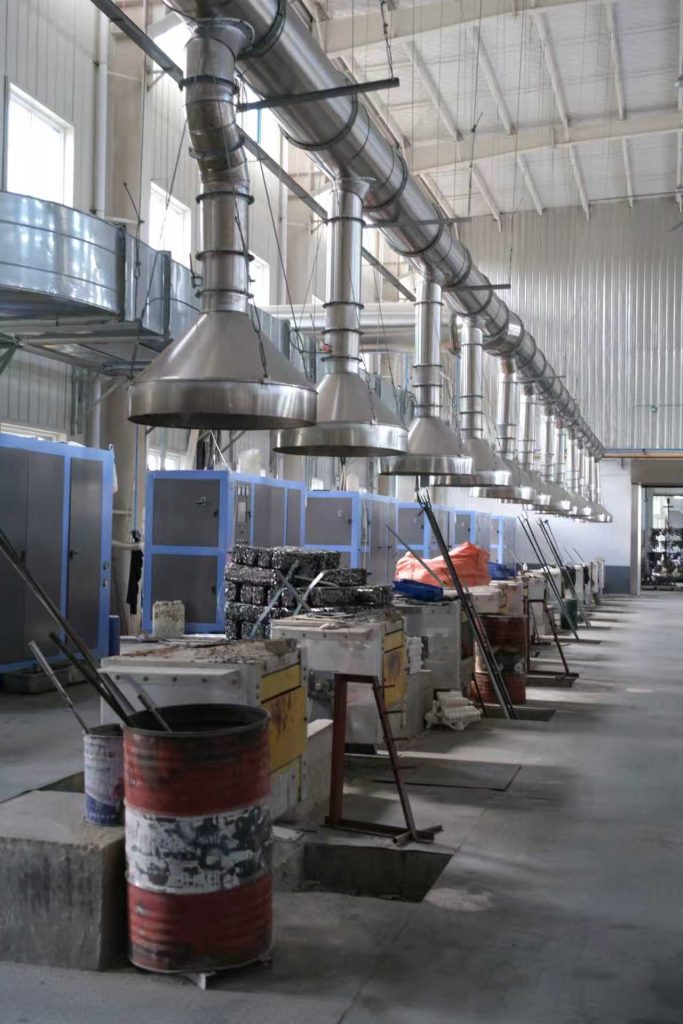
Next, we pour molten metal into the ceramic mold.
We control temperature and pouring speed carefully. This helps us ensure smooth metal flow, strong structure, and good surface quality.
Metal Pouring Investment Casting Process | Melting & Casting
Step 6: Shell Removal, Cutting & Shot Blasting
After the metal cools, we remove the ceramic shell to reveal the casting. Then, we cut the parts from the runner system.
Next, we use shot blasting to clean the surface and remove any remaining shell material. As a result, the casting becomes clean and ready for the next step.
Shell Removal & Shot Blasting in Investment Casting Process
Step 7: Finishing & Inspection
After cleaning, we carry out finishing and inspection.
We grind and trim the parts to remove extra material. Then, we apply surface treatment if needed. Next, we check dimensions and surface quality to make sure each part meets the required standards.
Investment Casting Finishing & Inspection | Quality Control
Step 8: Packaging
After inspection, we prepare the castings for delivery.
We clean and protect each part. Then, we use proper packaging to prevent damage during transport. Finally, we label and organize the products based on customer requirements.
Why Investment Casting is Widely Used
The investment casting process offers several advantages, including the ability to produce complex shapes with high precision, excellent surface finish, reduced machining requirements, and compatibility with a wide range of materials.
As a result, it is widely used in aerospace, automotive, and industrial applications.
Conclusion
Each step in the investment casting process plays a critical role in determining the final product quality. From mold development to inspection, strict control and expertise are essential.
Looking for a reliable investment casting partner?
Explore our full process here:
Investment Casting Process | Precision Casting Manufacturer
Understand the industries we served: